A first restaurant shift goes more smoothly when the basic arrangements are confirmed before you arrive. You do not need to know every procedure already. You do need to know where to report, who is expecting you and which instructions came from the actual employer rather than an unrelated online guide.
The checklist here is general restaurant-work advice. Sizzling Platter's official jobs hub connects applicants with brand-specific opportunities, but it does not establish one universal first-day checklist for every location. Follow the instructions supplied for your role and ask your hiring contact about anything missing.
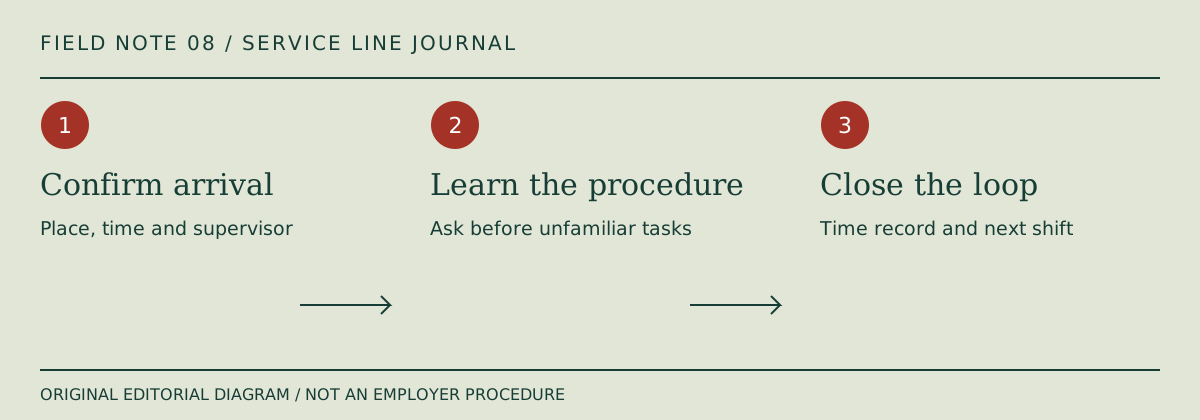
Confirm the essentials in advance
- Verify the restaurant address, date, start time and person to ask for on arrival.
- Ask what clothing or footwear is required before buying anything.
- Confirm which onboarding documents are needed and how to provide them securely.
- Ask whether the first session is orientation, practical training or a combination.
- Check how arrival, departure and training time are recorded.
- Keep a reliable contact method available in case travel goes wrong.
Do not send identity or banking documents to an unverified person simply because a message mentions onboarding. Use the employer's confirmed process. This independent site does not collect those documents or provide an employee login.
Learn the station before trying to be fast
During training, ask your supervisor to explain the sequence of tasks and demonstrate unfamiliar equipment. Repeat important instructions back if that helps you check understanding. If a step is unclear, pause and ask rather than copying a shortcut you happen to see someone else use.
Speed should not come from guessing about food handling, cleaning chemicals, hot surfaces or machinery. Learn where to find the relevant procedure and who can answer a safety question. For young workers, some tasks or equipment may be restricted by law; a busy shift does not remove those restrictions.
Practice a simple handoff
Imagine you notice that an order cannot be completed because an ingredient has run out. A useful habit is to tell the responsible teammate promptly, identify what is affected and ask how the guest should be updated. Do not silently substitute an item or make an allergy-related assurance without authorized information.
The same pattern applies to a mistake: report it early enough for someone to act. You are learning both the task and the communication system around it. Knowing who owns the next step can matter as much as knowing where an item is stored.
End the shift with fewer unknowns
Before leaving, check that your time record reflects the time you worked and ask about any unfamiliar correction process. The Department of Labor's restaurant toolkit explains why accurate records and applicable wage protections matter. Keep your own simple record without copying private customer or coworker information.
Finally, confirm when and where your next shift is scheduled. Ask for one or two priorities to practice rather than trying to master every station at once. A brief note about new procedures and unresolved questions can make the second shift easier. Be receptive to feedback, while continuing to ask whenever a task, instruction or safety boundary is unclear.
Set up a small first-shift note
Before leaving home, keep the confirmed address, arrival time and supervisor's name together. A restaurant inside a shopping center may have a different staff entrance or arrival instruction from the customer entrance. Ask rather than guessing, especially when training begins before public opening. Leave room for the names of people introduced during orientation and the next scheduled shift.
The note should contain information you need to work, not other people's private data. Do not photograph customer orders, payment screens, security codes or staff records for personal reference. If a process is difficult to remember, ask whether an approved checklist or training guide is available. Learning from the employer's current instructions is more reliable than copying an unfamiliar internet checklist.
Ask what to do when training stops
A trainer may be interrupted by a customer or an operational issue. Before continuing an unfamiliar task alone, clarify which steps you are allowed to perform without supervision. If the answer is unclear, pause the uncertain part and ask the appropriate person. Being new does not require pretending that you understood an instruction you did not hear.
Imagine being shown part of a cleaning process when the trainer is called away. You know where supplies are stored, but not which product is intended for the surface or how it must be used. The useful next step is to request the approved instruction, not to combine products or choose by smell. This is a general safety example, not a procedure for any particular restaurant or chemical.
Learn the language of a useful question
A specific question saves time: “I finished this step; is the next step packaging or checking with the person at the next station?” is easier to answer than “What now?” Say what you understand, identify the missing part and repeat the answer when needed. This gives the trainer a chance to catch an incorrect assumption before it becomes part of your routine.
The same approach works when an instruction conflicts with something you were told earlier. Describe both instructions without blaming a coworker and ask the authorized supervisor which one applies. Different equipment, stations or situations can have different procedures. Resolving the difference is more important than deciding on your own which person was right.
Leave with a short learning plan
At the end of the shift, choose one task you can now describe, one task that still needs supervised practice and one unanswered question. Ask whether those priorities fit the next training session. Keep any personal notes brief and free of confidential operational information. Do not measure the whole first day only by speed: understanding the reporting line, the time-record process and when to stop and ask are useful progress too.
Continue reading
Restaurant Pay Records: What to Save and Where to Get Help
Finding the Right Contact: Restaurant, Recruiting or Workplace Issue?